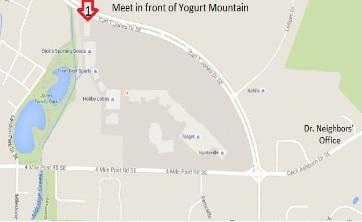
| Walk With the Doc Saturday August 19th, 7:00 am Glycemic Diets A glycemic diet is a food plan that focuses on eating foods that help control blood sugar levels. This is desirable because our body performs best when blood sugar is kept relatively constant. When blood sugar drops too low, we feel tired and hungry. When blood sugar goes too high it signals the pancreas to secrete extra insulin. The insulin moves glucose from your blood into your cells. Unless we are actively using the glucose, the excess glucose is turned into fat. All sensible diets have blood sugar control as part of their strategy. The Zone Diet, Sugar Busters and the Slow-Carb Diet emphasize the glycemic index as a food planning tool. In contrast, most other diets focus more on calorie restriction via portion control. Some diets refer to low glycemic index (GI) carbohydrates as ‘slow carbs’ and high GI carbohydrates as ‘fast carbs.’ For diabetics, a food strategy based on the glycemic index is essential. For others, it may not be essential for short term well being but if ignored will often lead to long term health problems. A shortcoming of the glycemic index as a food selection criterion is that it doesn’t factor in portion size. A typical problem would be with a food like watermelon that has a GI of 80. As it happens, watermelon has relatively few digestible carbohydrates and you would have to eat a lot to make a difference in blood sugar levels. To account for the shortcoming of the glycemic index as a guide, the glycemic load (GL) index was created. In essence the glycemic load (GL) index indicates the change in blood glucose levels after eating a typical serving of food. The glycemic load (GL) values are generally grouped into the following ranges • Low GL: 1 to 10 • Medium GL: 11 to 19 • High GL: 20 or more A 3/4 cup serving of watermelon has a GL value of 5 which places it in the healthy (low GL) range. By comparison, a 2/3-cup serving of raw carrots has a GL value of 2. While the carrots would be a better choice, the serving of watermelon is still a healthy choice. Glycemic index and glycemic load are both helpful guides but neither are dieting panaceas. Individual differences have much to do with how our bodies handle spikes in glucose levels. Also these indexes tell us nothing about other nutritional information (vitamins, protein, fats, minerals, etc.) Some foods with a low GI have a high fat content that adds extra calories. For example, one cup of whole milk has a very favorable GL of 4. However, the added calories have to be considered if weight loss is the goal. Typical low glycemic index foods include green vegetables, raw carrots, bell peppers, kidney beans, chickpeas, lentils, bran cereals, and most fruits. Medium glycemic index foods include raisins, oat cereals, rye bread, brown rice, and raw pineapple. High glycemic index foods include white rice, white bread, potatoes and most dessert foods. In general, diets with a low GL are associated with more weight loss, better cholesterol control, well balanced nutrition, and better appetite control. All diets are guides and how well they work will vary with individual differences. For more about glycemic diets read “Glycemic index diet - What's behind the claims.” Glycemic Index vs. Glycemic Load Calories are important but how fast our body converts them into blood sugar (glucose) is an equally important concern. To help identify foods that are better for us two measures are used. The glycemic index (GI) is a measure of the blood glucose-raising potential of a food. Consumption of high-GI foods causes a sharp increase in blood glucose concentration that declines rapidly, whereas consumption of low- GI foods results in a lower blood glucose concentration that declines gradually. The glycemic load (GL) simplifies choosing foods by factoring in both the calorie content in a standard serving and how quickly the food can be turned into blood sugar. The GL of a food is calculated by multiplying the glycemic Index (GI) by the amount of carbohydrate in grams (g) provided by a food serving and then dividing the total by 100. Cooking and processing affects the glycemic index (GI). When food is broken down into smaller particles or the cell wall is weakened by cooking it will become more easily absorbed and as a result have a higher GI. When carbohydrates are eaten with fat, protein, or fiber digestion slows and in effect the overall GI of the meal is lowered. While the glycemic index (GI) helps identify problematic foods, it’s the glycemic load that tells how much we can expect to safely eat. For example, a small portion of a high glycemic food might fit into a diet if total calories for the day have not been exceeded. The best way to control blood sugar is through diet. Usually this will be a diet containing plenty of fruits, vegetables and legumes. Choosing smaller helpings of potatoes, less highly refined grain products and in general all foods with concentrated sugar is also helpful. For the glycemic index (GI) and glycemic load (GL) for specific foods, follow the links below. • Revised International Table of Glycemic Index (GI) and Glycemic Load (GL) Values • University of Oregon, Glycemic Index and Glycemic Load Finding creative ways to lowering the glycemic index for meals is a worthy challenge and one that can rewards us with a better quality of life. Begin by making a list of the GI for the twenty most common foods in your diet. With that knowledge in hand you are on your way. Perhaps along the way you will join me for a Saturday morning walk and tell me about your progress. Nancy Neighbors, MD Let’s take a walk Date: Saturday, August 19h Location: Jones Family Park (see map) Time: 7:00 am (Meet in front of Yogurt Mt.) Yogurt Mt. is the last store at the end of Valley Bend Shopping Center). If cloudy, bring an umbrella, we walk come rain or shine. Click here for Dr. Neighbors’ 2017 news page If you would prefer to discontinue receiving ideas about healthy living from Dr. Neighbors please phone (256) 882-6085. |